
What Happened
The University Grants Commission’s newly notified Promotion of Equity in Higher Education Institutions Regulations, 2026 have sparked sustained online opposition, particularly from General Category (GC) students, faculty members, and commentators.
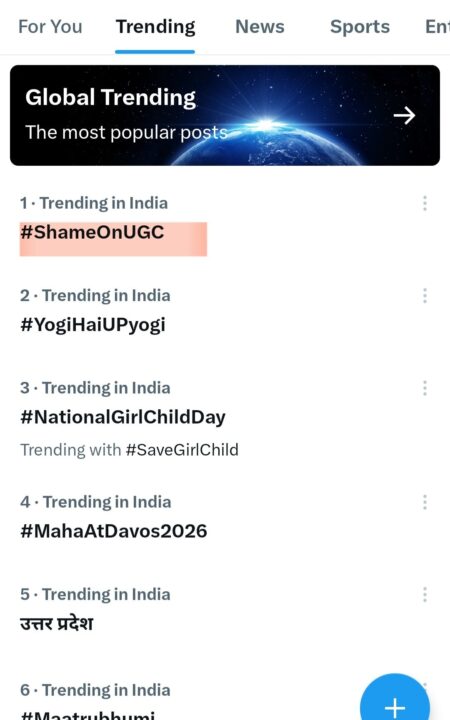
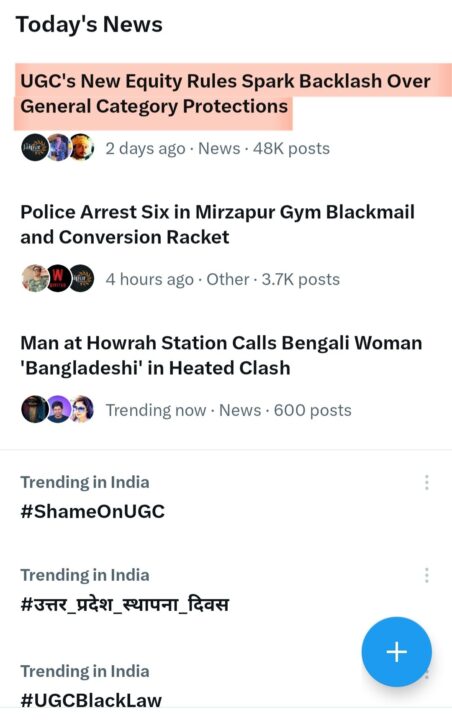
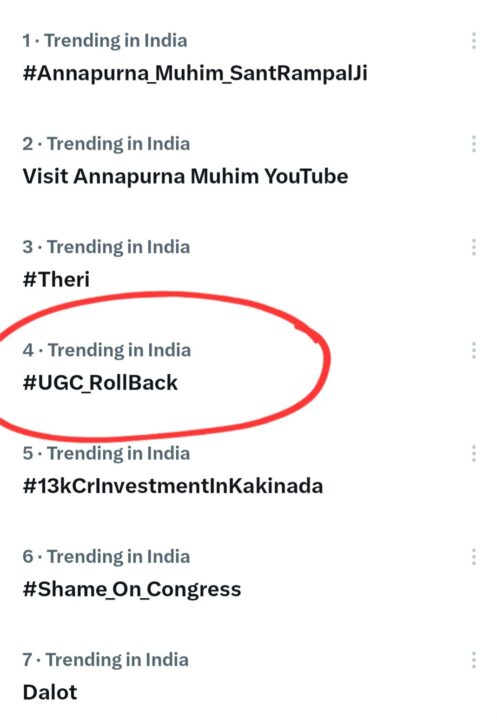
On 24 jan, 2026, hashtags including #ShameOnUGC, #UGC_RollBack, trended on X in India, with users sharing screenshots of the regulations and questioning specific clauses. The online mobilisation coincides with the early implementation phase of the new rules, which replace the earlier 2012 anti-discrimination framework.
What began as text-based criticism has since expanded into sustained video commentary across platforms such as Instagram Reels, YouTube Shorts, and X videos, significantly widening the reach of the debate.
Why the Regulations Were Introduced
The UGC says the 2026 regulations were framed to address persistent concerns about discrimination on higher education campuses and to strengthen enforcement mechanisms that were seen as weak under the UGC (Promotion of Equity in Higher Educational Institutions) Regulations, 2012.
The move follows:
More Read
- Long-standing complaints of caste-based discrimination
- Court observations on the need for clearer redress mechanisms
- Alignment with the equity and inclusion objectives of NEP 2020
The regulations apply uniformly to all higher educational institutions in India, including central universities, state universities, colleges, and deemed universities.
What the UGC Regulations Actually Say
Key Definitions
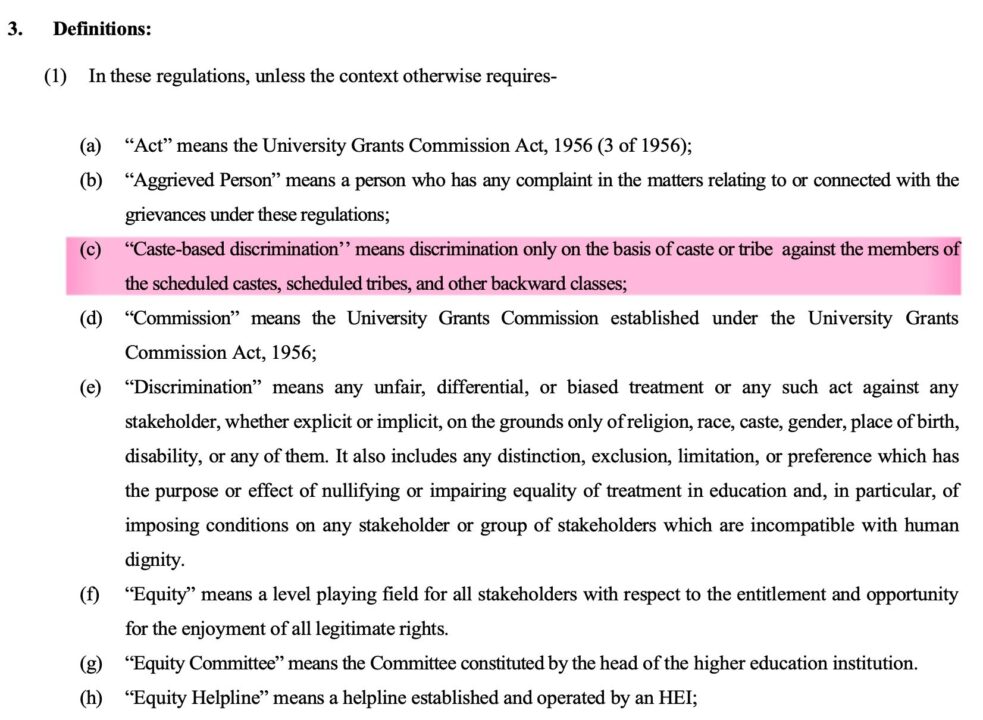
The controversy largely centres on the definition clauses of the regulations.
The notified rules define “caste-based discrimination” as discrimination only on the basis of caste or tribe against members of Scheduled Castes (SC), Scheduled Tribes (ST), and Other Backward Classes (OBC).
Separately, the regulations define “discrimination” more broadly as any unfair, differential, or biased treatment explicit or implicit on grounds including religion, race, caste, gender, place of birth, or disability.
The definition of “equity” is framed as ensuring a level playing field for all stakeholders in accessing legitimate rights and opportunities.
Critics argue that while the broader definition of discrimination exists, the explicit narrowing of caste-based discrimination to certain groups has practical consequences for how complaints are framed, processed, and prioritised.
- Caste-based discrimination as discrimination only against members of Scheduled Castes, Scheduled Tribes, and Other Backward Classes.
- Discrimination more broadly as unfair or biased treatment on grounds such as religion, race, caste, gender, place of birth, or disability.
- Equity as a level playing field for all stakeholders in enjoying legitimate rights.
These definitions form the legal basis for complaint handling and enforcement.
New Institutional Mechanisms Introduced
Under the 2026 framework, institutions must establish:
- Equal Opportunity Centres
- Equity Committees with mandatory representation from specified groups
- 24×7 Equity Helplines
- Equity Squads for campus monitoring
- Equity Ambassadors in departments and hostels
UGC is empowered to penalise institutions for non-compliance, including withdrawal of grants or recognition.
What Is Driving the Backlash
Opposition to the regulations centres on how protections and definitions are structured, rather than on the goal of preventing discrimination itself.
Critics point to:
- The explicit naming of certain social groups in caste-based discrimination definitions
- The absence of equivalent language explicitly covering General Category individuals
- The lack of stated safeguards against false or malicious complaints
- Mandatory escalation to police if an inquiry finds a prima facie offence
They argue that the enforcement-heavy design raises due process concerns.
What General Category Groups Are Demanding
Across posts and videos, General Category critics are calling for:
- Explicit inclusion of GC individuals in protection language
- Clear inquiry safeguards and burden-of-proof standards
- Penalties for demonstrably false complaints
- Clarification on how academic decisions will be distinguished from discrimination
These demands are being framed as calls for procedural balance, not rollback of protections for other groups.
Debate Moves Beyond Hashtags to Video Platforms
The issue has expanded beyond text-based trends on X to video-led critique on Instagram, YouTube Shorts, and X videos.
Journalist and author Ajit Bharti, among others, has publicly criticised the regulations, using hashtags such as #UGC_RollBack and questioning the framing of caste-based provisions. Similar videos are circulating across short-form platforms, bringing the debate to audiences that may not otherwise engage with regulatory texts.
UGC’s Position So Far
As of publication, the UGC has not released a detailed public clarification responding to specific allegations of asymmetry or lack of safeguards.
Officials have reiterated that the regulations are intended to ensure equity and dignity on campuses, but have not addressed demands for amendments or explanatory guidelines.
What Happens Next
Possible next steps include:
- Issuance of clarificatory guidelines by UGC
- Legal challenges or representations by affected groups
- Changes in implementation practices at institutional level
How these regulations are enforced will determine whether the current backlash escalates or subsides.
Why This Matters
The controversy highlights a broader tension in campus governance: balancing strong anti-discrimination enforcement with due process and institutional fairness.
As universities begin implementing the 2026 regulations, the way this balance is struck will shape trust, compliance, and campus climate across India’s higher education system.