Summary
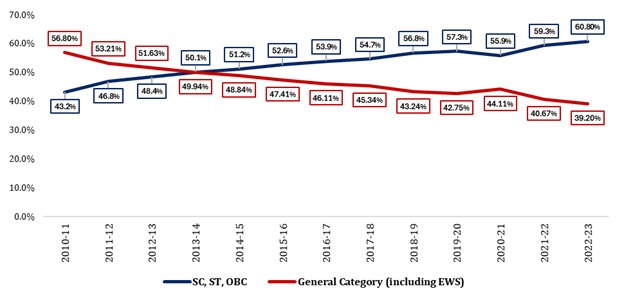
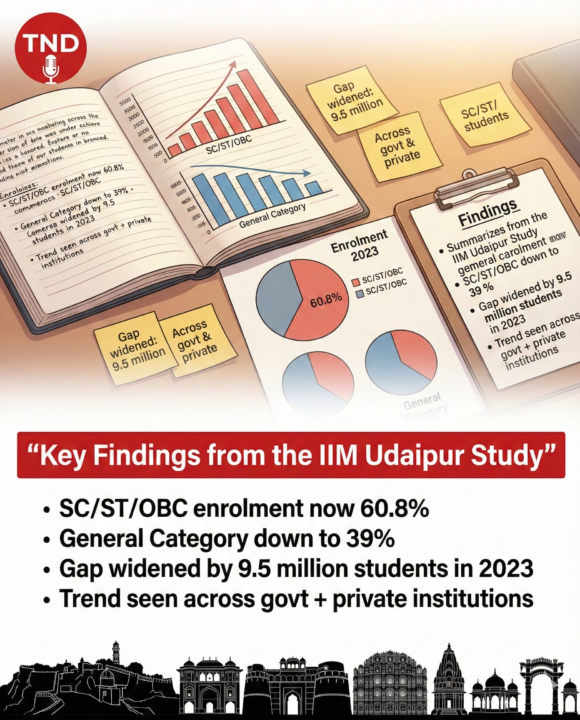
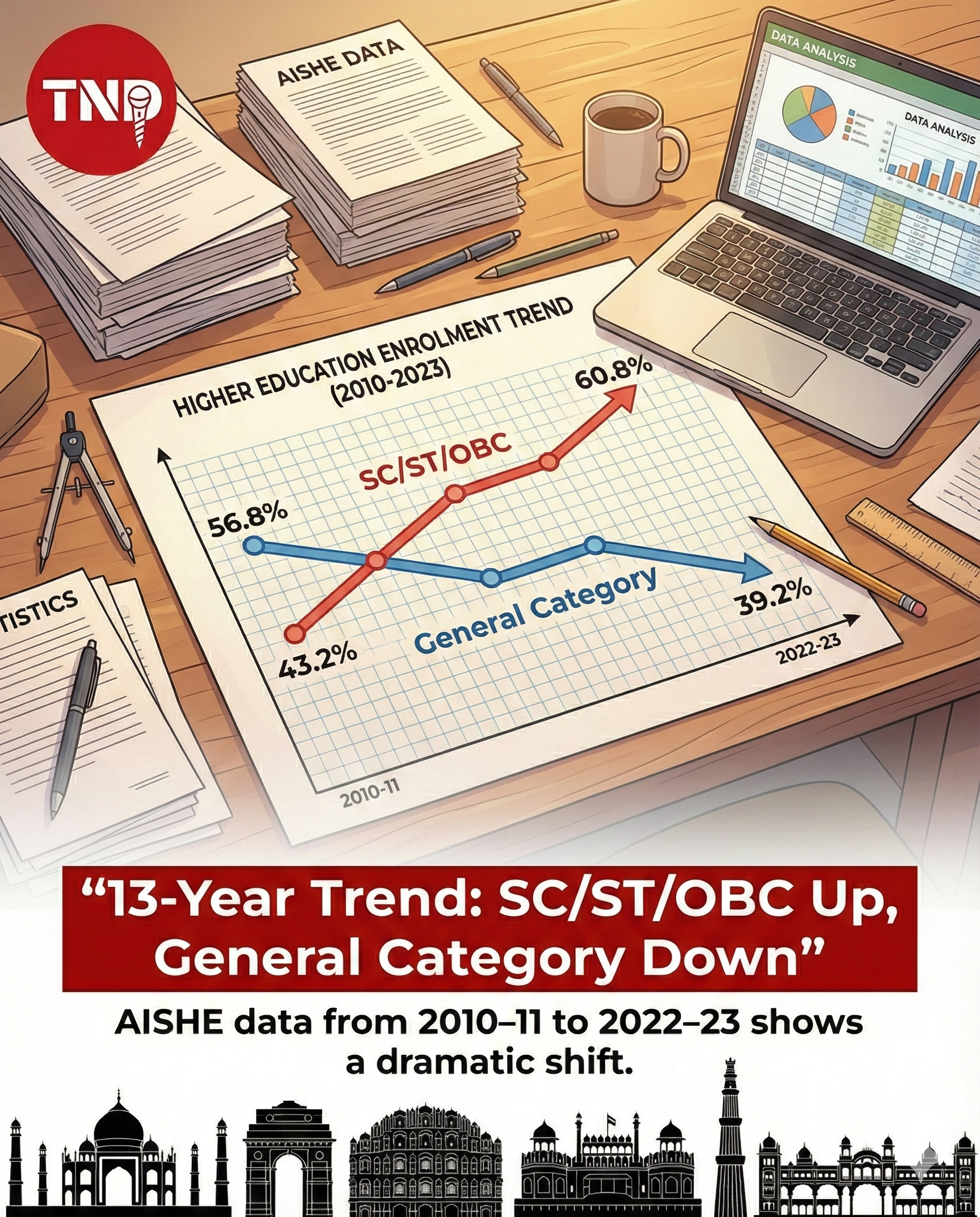
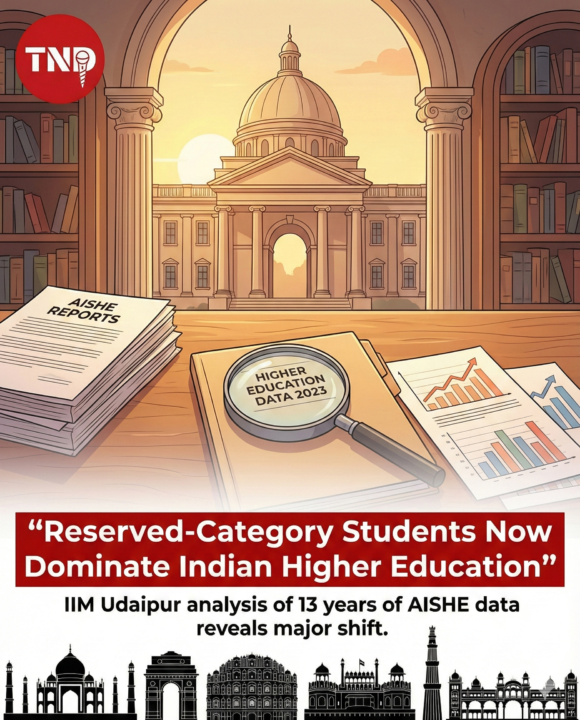
A 13-year analysis of AISHE data shows SC/ST/OBC students now constitute 60.8% of all higher-education enrolments.
General Category (including EWS) share has declined from 56.8% in 2010–11 to 39.2% in 2022–23.
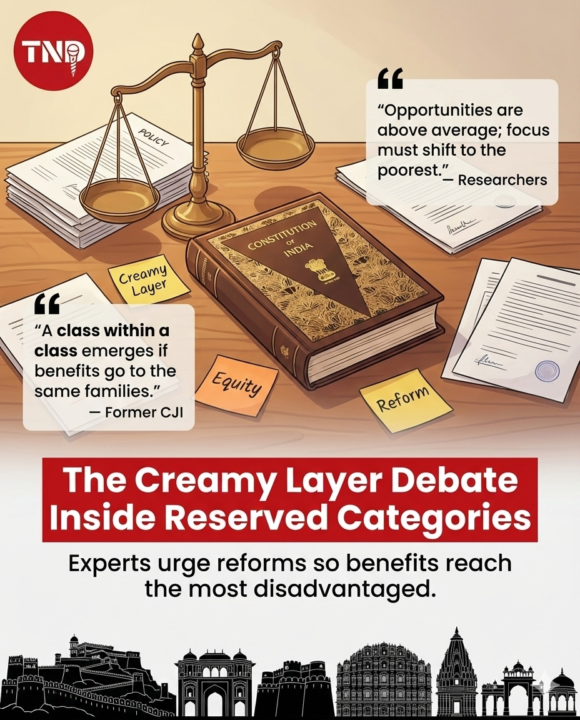
Researchers highlight the need to revisit reservation frameworks and address the creamy-layer concentration within categories.
The study covers 43.8 million students across 60,380 institutions, making it one of the most comprehensive analyses ever conducted.
Why This News Matters
This report challenges long-standing public narratives about who dominates India’s higher-education system. For decades, discussions on representation focused on limited access for SC/ST/OBC students. The new data shows the opposite trend: these groups now form the clear majority across government and private institutions. The findings have direct implications for reservation policy, future social-justice frameworks, and debates on equity in professional and technical education.
More Read
Timeline of Events
2010–11: The Ministry of Education begins releasing All-India Survey of Higher Education (AISHE) reports. General Category students account for 56.8% of enrolment; SC/ST/OBC comprise 43.1%.
2011–2018: Steady rise in SC/ST/OBC enrolment due to expanded institutions, fee subsidies, hostels, scholarships, and increased first-generation learners entering college.
2019–2022: Shift accelerates as General Category share falls below 45% for the first time. SC/ST/OBC cross the halfway mark.
2023: Gap reaches its widest point. SC/ST/OBC enrolment exceeds General Category by 9.5 million students.
2024–25: Researchers at IIM Udaipur’s Center for Development Policy and Management (CDPM) complete a structured 13-year analysis of AISHE data and publish their findings.
Impact
Public: Students from reserved categories now have greater representation across courses, including engineering, management, medicine, and professional degrees.
Government: The data pressures policymakers to revisit reservation rules, particularly around the creamy layer and benefit distribution.
Economy: Changing demographic representation may influence workforce composition, competitive exam trends, and demand for professional education.
Migration Patterns: Experts note an increase in General Category students pursuing higher education abroad, citing competition and limited seat availability at home.
Institutions: Universities may need to realign support systems remedial programs, scholarships, and skill-development initiatives to match changing campus demographics.
Official Statements / Source Quotes
This report shatters several misconceptions about the social composition of India’s higher education. SC/ST/OBC students overwhelmingly dominate enrolments across disciplines.
Prof. Venkatramanan Krishnamurthy, IIM Udaipur
If benefits go repeatedly to the same families, a class within a class emerges. Reservation must reach those who truly need it.
Former Chief Justice of India B.R. Gavai
Opportunities for SC/ST/OBC students are not an issue anymore it is above average. The challenge now is ensuring the creamy layer does not displace the most disadvantaged.
Researcher Thiyagarajan Jayaraman
Everyone involved in India’s reservation debates should study this data. It provides a clear picture of access trends across caste categories.
Sociologist Dr. Salvatore Babones
Comparison / Background
Earlier AISHE cycles regularly noted gaps in enrolment among disadvantaged groups. Policymakers introduced scholarships, hostels, and reservation-based admissions to close these gaps.
However, recent studies, including work by CasteFiles and multiple state-level reviews, show a consistent upward trend in SC/ST/OBC educational mobility.
Internationally, debates on caste-related discrimination in Western universities often portray Indian higher education as dominated by upper castes. The IIM Udaipur analysis contradicts this framing.
Across states such as Tamil Nadu, Karnataka, and Uttar Pradesh, local survey data aligns with the national trend: reserved-category students now form the majority in undergraduate and postgraduate programmes.
Data & Numbers
Higher Education Enrolment Share (2010–2023)
SC/ST/OBC:
2010–11: 43.1%, 2015–16: 51.2%, 2020–21: 57.3%, 2022–23: 60.8%
General Category (Including EWS):
2010–11: 56.8%, 2015–16: 48.8%, 2020–21: 44.1%, 2022–23: 39.2%
Institutional Breakdown
Govt institutions: 62.2% SC/ST/OBC, 37.8% General
Private institutions: 60% SC/ST/OBC, 40% General
Total Data Sample
Institutions: 60,380, Students: 43.8 million, Data period: 13 years
Ground Reality
Field feedback from universities indicates:
Increased participation of first-generation learners from rural and semi-urban areas.
Student unions in several universities are demanding clearer implementation of the creamy-layer principle to prevent benefit concentration.
Universities report higher competition for open (non-reserved) seats, with SC/ST/OBC students securing larger shares through merit-based admissions.
General Category students are increasingly enrolling in foreign universities, citing domestic competition and limited access to subsidised seats.
Local administrators in Rajasthan, Tamil Nadu, and Odisha confirm that the demographic reversal is visible across engineering colleges, teacher-training institutions, nursing colleges, and polytechnic institutes.
Original Analysis (The News Drill)
The data points to three realities:
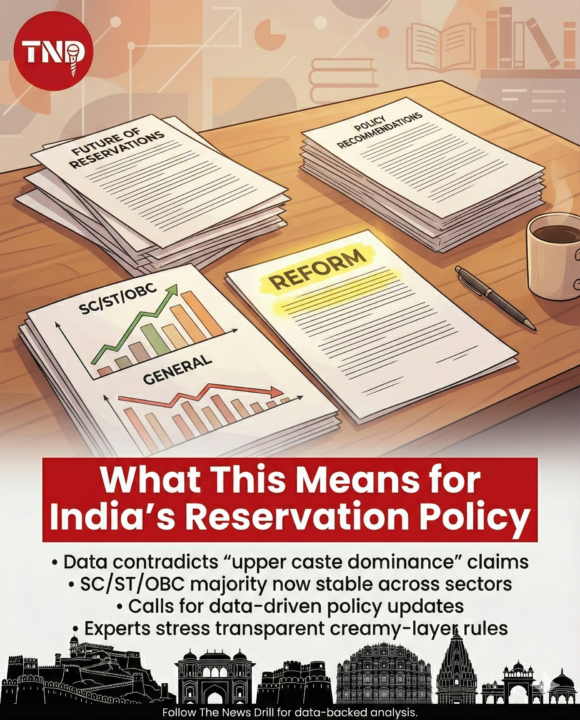
- 1. Access gaps have largely closed for SC/ST/OBC groups in higher education, especially at the undergraduate level.
- 2. The primary challenge now is intra-category inequality — the creamy-layer issue — which policymakers have not updated in decades.
- 3. Reservation debates framed around “upper caste dominance” no longer match actual enrolment patterns.
Going forward, evidence-based reforms will be essential. Without structured identification of the creamy layer across SC, ST, and OBC categories, benefits will increasingly accrue to upwardly mobile families rather than those in the lowest income and social strata.
The shift also indicates a broader transformation: rural and historically marginalized communities are integrating into higher education at unprecedented levels.
Conclusion
India’s higher-education landscape has undergone a structural demographic reversal. SC/ST/OBC students now form the majority, and the trend is consistent across states and institution types.
The next phase of policymaking will likely focus on:
The report underscores one key takeaway: social policy must evolve with data, not outdated assumptions.