
- UGC notified Promotion of Equity in Higher Education Institutions Regulations, 2026.
- Rules apply to all public and private higher education institutions across India.
- Institutions must establish Equal Opportunity Centres, committees, and helplines.
- Regulations set timelines for complaints and allow escalation to police or ombudsperson.
- Non-compliance can result in loss of UGC recognition and programme approvals.
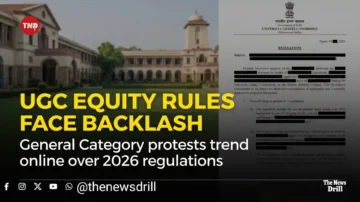
In January 2026, the University Grants Commission (UGC) quietly but decisively overhauled India’s campus anti-discrimination framework by notifying the University Grants Commission (Promotion of Equity in Higher Education Institutions) Regulations, 2026. Replacing the 2012 regulations, the new rules apply uniformly to all universities, colleges, and deemed institutions public and private across the country
- Why the UGC Acted Now
- What the 2026 Regulations Actually Do
- How the UGC’s Anti-Discrimination Rules Changed: 2012 vs 2026
- How “Discrimination” Is Defined and Why It Matters
- The Complaint and Enforcement Mechanism
- Is This a “Rohith Vemula Act” in Disguise?
- Who the Regulations Explicitly Protect
- Who Is Most Exposed Under the New Regime
- What the Regulations Do Not Address Clearly
- Potential Risks and Long-Term Consequences
- The Bottom Line
On paper, the objective is uncontroversial: to eradicate caste-based and other forms of discrimination in higher education. In practice, however, the regulations mark a structural shift in how Indian campuses are governed, monitored, and disciplined, with consequences that extend far beyond grievance redressal.
This is not merely a welfare measure. It is a compliance-heavy regulatory regime with legal, academic, and civil-liberty implications.
Why the UGC Acted Now
The immediate background lies in nearly a decade of pressure on higher education institutions following high-profile student suicides, litigation, and sustained allegations that caste discrimination on campuses was being minimised, informally handled, or denied altogether. The Rohith Vemula case in 2016 became a turning point not because it produced a standalone law, but because it exposed the institutional vacuum in how universities handled discrimination complaints.
Subsequent UGC advisories, internal committees, and counselling mandates failed to produce uniform enforcement. At the same time, the National Education Policy (NEP) 2020 elevated “full equity and inclusion” as a foundational principle of governance, not a discretionary value.
More Read
The 2026 regulations are the UGC’s answer to that gap: moving from guidelines to binding rules, and from reactive grievance handling to proactive institutional monitoring.
What the 2026 Regulations Actually Do
At their core, the new regulations impose a parallel equity-governance structure inside every higher education institution.
Each institution must now establish an Equal Opportunity Centre (EOC), backed by an Equity Committee chaired by the Head of the Institution. Alongside this, campuses must operate a 24×7 Equity Helpline, maintain an online portal for discrimination complaints, deploy Equity Squads to monitor vulnerable spaces, and appoint Equity Ambassadors in every department, hostel, library, and facility.
These are not symbolic bodies. They are empowered to receive complaints, conduct inquiries on accelerated timelines, escalate cases to the police where necessary, and trigger institutional action. Institutions must also publish bi-annual public reports disclosing demographic data, dropout rates, complaints received, and their current status
Failure to comply carries severe consequences, including debarment from UGC schemes, suspension of degree programmes, prohibition on online and distance learning courses, and even removal from UGC recognition lists under the UGC Act.
In effect, equity compliance is now tied directly to an institution’s legal and financial survival.
How the UGC’s Anti-Discrimination Rules Changed: 2012 vs 2026
| Area | 2012 Regulations | 2026 Regulations |
| Overall approach | Focused on preventing discrimination mainly at the student level, with grievance redress as the core tool. | Moves to active enforcement, monitoring, and institutional accountability across the entire campus ecosystem. |
| Who is covered | Primarily students facing discrimination in access to education and campus life. | Students, faculty, staff, and administrators are all covered as “stakeholders.” |
| How discrimination is viewed | Defined broadly, but applied mainly to denial of access, segregation, or dignity-violating treatment. | Defined broadly and includes implicit acts; even unintended impact can qualify as discrimination. |
| Who is prioritised | General student population, without explicit prioritisation of categories. | Explicit priority to SC, ST, OBC, EWS, persons with disabilities, and women. |
| Institutional setup | Equal Opportunity Cells and existing grievance mechanisms. | Dedicated Equal Opportunity Centres with Equity Committees, squads, and ambassadors. |
| Campus monitoring | No continuous monitoring mechanism was prescribed. | Continuous oversight through equity squads and unit-level equity ambassadors. |
| Complaint handling | Institutions handled complaints internally, without fixed timelines. | Strict timelines: committee meeting in 24 hours, report in 15 days, action in 7 days. |
| Police involvement | Not clearly spelt out; depended on existing laws. | Mandatory escalation to police if a prima facie criminal offence is found. |
| Transparency | No requirement to publicly disclose complaints or outcomes | Mandatory bi-annual public reports on complaints, demographics, and dropouts. |
| Consequences for institutions | Limited and indirect enforcement. | Severe penalties including funding blocks, programme bans, and loss of UGC recognition. |
| Safeguards for the accused | Not clearly addressed. | Still not clearly addressed; no explicit provision on false complaints or academic discretion. |
How “Discrimination” Is Defined and Why It Matters
One of the most consequential aspects of the regulations is the definition of discrimination itself.
The rules define discrimination as any unfair, differential, or biased treatment explicit or implicit whose purpose or effect impairs equality or human dignity. Crucially, intent is not required. Even actions without malice can fall within the scope if their outcome is perceived as unequal.
This expansive definition lowers the evidentiary threshold and shifts the focus from provable wrongdoing to subjective impact. From an enforcement perspective, this makes intervention easier. From a due-process perspective, it introduces ambiguity especially in academic settings where evaluation, discipline, and disagreement are inherent.
The Complaint and Enforcement Mechanism
Under the new framework, complaints can be filed in writing, online, by email, or through the Equity Helpline. Complainants may request confidentiality, and institutions are required to protect them from retaliation.
Once a complaint is received, the Equity Committee must meet within 24 hours. An inquiry report must be completed within 15 working days, followed by institutional action within 7 days. If a prima facie criminal offence appears to be involved, the matter is to be referred to the police immediately.
Appeals lie before the Ombudsperson under the UGC’s 2023 grievance regulations.
This compressed timeline reflects the UGC’s intent to prevent delays and institutional stonewalling. At the same time, it raises questions about whether complex academic disputes can be fairly examined within such narrow windows.
Is This a “Rohith Vemula Act” in Disguise?
Despite widespread commentary, there is no statute called the Rohith Vemula Act. What exists is a policy legacy: court observations, UGC advisories, and administrative reforms triggered by the Hyderabad Central University case.
The 2026 regulations differ from that earlier framework in critical ways. Earlier mechanisms were largely advisory, reactive, and limited to student grievances. The new rules are binding, proactive, and institution-wide, covering students, faculty, staff, and administrators alike. Surveillance mechanisms such as Equity Squads and mandatory ambassadors did not exist earlier.
In that sense, the regulations represent not a continuation but an escalation from grievance redressal to continuous oversight.
Who the Regulations Explicitly Protect
While the regulations apply to all “stakeholders,” they place particular emphasis on protecting members of:
- Persons with Disabilities
- Economically Weaker Sections
- Other Backward Classes
- Scheduled Tribes
- Scheduled Castes
- Women
Committee composition is mandated to include representation from these groups, and institutional policies are expected to prioritise their concerns
This focus aligns with constitutional affirmative action principles, but it also shapes how complaints are likely to be interpreted and prioritised in practice.
Who Is Most Exposed Under the New Regime
The regulations significantly increase exposure for faculty members and administrators. Classroom remarks, grading decisions, mentorship styles, or disciplinary actions can now be scrutinised through the lens of “implicit discrimination.” The traditional deference given to academic judgment is not explicitly protected.
Heads of institutions carry personal responsibility for ensuring compliance. Complaints against them trigger special procedures, but not insulation from consequences.
General-category students and faculty are not excluded from protection, but the regulations do not explicitly address safeguards against malicious or strategically motivated complaints, leaving a structural asymmetry in how protection operates.
What the Regulations Do Not Address Clearly
Several critical safeguards are either absent or weakly defined.
There is no explicit penalty for false or malicious complaints, no articulated standard of proof, and no guaranteed right to cross-examination or legal representation for the accused within institutional proceedings. Academic freedom particularly the right to rigorous evaluation or unpopular scholarly positions is not carved out as a protected space
These omissions do not invalidate the regulations, but they create areas of vulnerability that are likely to be tested in courts.
Potential Risks and Long-Term Consequences
Supporters argue that the regulations finally force institutions to confront caste bias seriously. Critics warn of unintended effects.
One likely consequence is a chilling effect on academic discourse, where faculty may avoid difficult discussions or strict evaluations to reduce risk. Another is the possibility of weaponisation, where grievance mechanisms become tools in personal or political conflicts.
Smaller colleges may struggle with compliance costs and administrative burden, while universities may face increased litigation challenging procedural fairness and proportionality.
Ultimately, the success or failure of the framework will depend less on its text and more on how Equity Committees interpret “implicit discrimination” and how UGC balances enforcement with restraint.
The Bottom Line
The UGC’s 2026 regulations are not merely about checking caste bias. They represent a fundamental shift in campus governance, embedding surveillance, rapid adjudication, and institutional liability into everyday academic life.
They strengthen protection for historically marginalised groups and standardise accountability across India’s higher education system. At the same time, they weaken procedural neutrality and leave unresolved tensions between equity enforcement and academic autonomy.
Whether this framework delivers justice or creates new distortions will be decided not by intent, but by implementation and, inevitably, by judicial scrutiny.