

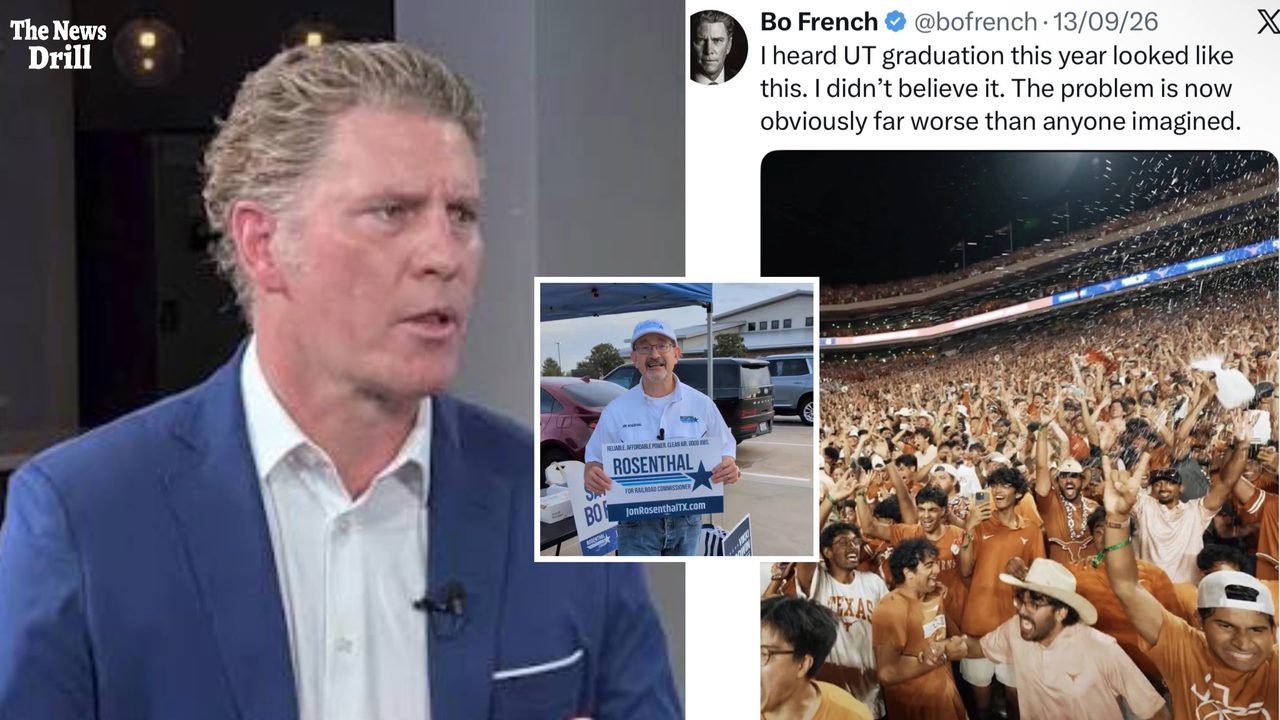
Democratic state Representative Jon Rosenthal has defeated Republican Bo French in the race for a seat on the Texas Railroad Commission, delivering a major victory for Democrats in a state long dominated by Republicans. The result comes after French faced sustained criticism over a series of inflammatory social-media posts, including a widely condemned attack on South Asian students at the University of Texas at Austin.
The latest Texas election results page, updated at 3:13 a.m. on November 4, showed Rosenthal with 3,256,313 votes, or 53.6 per cent, against French’s 2,716,105 votes, or 44.7 per cent. Libertarian candidate Arthur DiBianca received 100,697 votes, or 1.7 per cent. Rosenthal’s margin over French stood at 540,208 votes, with 6,073,115 ballots recorded in the race. These are live, unofficial results and remain subject to the state’s canvass and certification process. View the Texas election results.
A major setback for a candidate whose online rhetoric dominated the race
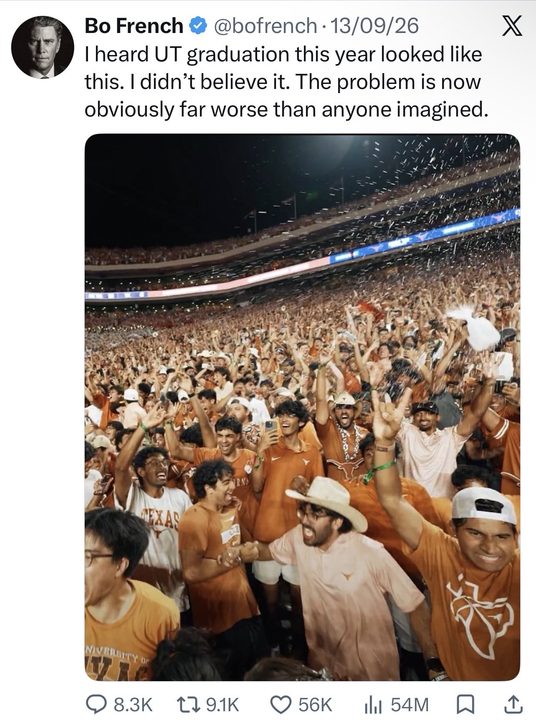
Bo French, a former chairman of the Tarrant County Republican Party and a self-described MAGA conservative, became a national talking point after posting a photograph of South Asian students celebrating the University of Texas Longhorns’ football victory over Ohio State in September. He suggested the scene showed that Americans were being displaced by foreigners and described the presence of the students as a problem.
The posts drew criticism because French had no evidence that the students were foreign nationals. Their appearance was not proof of their citizenship or immigration status. Several Texas Republicans, including Senator John Cornyn, condemned the remarks, while students targeted in the posts described the comments as racist and deeply troubling. The Texas Tribune reported that French stood by the remarks and argued that his objection was about policy rather than race. The Texas Tribune reported on the backlash, while a follow-up report detailed French’s response.
The controversy was not an isolated episode. French had previously drawn criticism for social-media posts using homophobic and ableist slurs against political opponents and people with disabilities. In 2025, he posted an X poll asking whether Jews or Muslims posed a greater threat to the United States, prompting calls from Republican leaders, including Lieutenant Governor Dan Patrick, for him to resign as Tarrant County GOP chair. He later said the poll had been misunderstood, deleted it and expressed regret for posting it. The Texas Tribune documented the earlier use of slurs, and CBS Texas covered the Jews-versus-Muslims poll and the reaction.
More Read

At the Conservative Political Action Conference in March 2026, French called for Republicans to embrace Islamophobia more openly and urged the United States to deport 100 million people — a figure far exceeding the country’s unauthorised immigrant population and one that would necessarily include American citizens. The remarks were reported by The Texas Tribune. The paper also reported that French had directed other inflammatory posts at LGBTQ+ people and political opponents.
X’s recommendation system helped the post travel beyond political circles
French’s post about the University of Texas students spread well beyond the usual audience for Texas Republican politics. The Washington Post reported that the post was picked up by X’s recommendation algorithm and carried into college-football feeds, helping it reach users outside right-wing political circles. The newspaper also described a wider online ecosystem in which anti-Indian and anti-immigrant content can attract attention and be monetised.
That reporting supports the conclusion that the platform’s recommendation system helped the post travel widely; it does not establish that X deliberately promoted the content because it was anti-Indian, nor does it establish how much French personally earned through platform payouts. Claims about a specific payout or an intentional anti-India algorithm would therefore go beyond the available evidence. Read The Washington Post’s report on the online anti-Indian backlash.
The controversy also helped put Democrat Jon Rosenthal in the spotlight
Rosenthal entered the general election with a substantial disadvantage in fundraising, but the political fallout from French’s viral post changed the dynamics of the contest. According to campaign-finance figures reported by The Texas Tribune, Rosenthal raised approximately $488,000 during the July-to-September reporting period, compared with French’s $439,000. The Democrat’s contributions came from donors in nearly every state, with most of the money coming from thousands of small donors in Texas. The fundraising surge followed the controversy over French’s post. The Texas Tribune’s fundraising report detailed the shift.
Rosenthal is not a political newcomer. He represents Texas House District 135, covering parts of northwest Houston, Cypress and Katy, and was serving his fourth term in the state legislature. He graduated from the University of Texas at Austin in 1991 with a degree in mechanical engineering and worked for more than 25 years as a project manager, engineering manager and subsea systems engineer in the oil and gas industry. He also earned a graduate certificate in subsea engineering from the University of Houston in 2016. His official Texas House biography outlines his professional and legislative experience.
Rosenthal campaigned on issues directly connected to the Railroad Commission’s responsibilities: the regulation of the oil and gas industry. His proposals included stronger groundwater safeguards, greater transparency around utility bills, action on companies that repeatedly breach pollution rules and restrictions on industry donations to the commission. His professional background gave him a contrasting profile to French, whose campaign placed heavy emphasis on immigration, DEI, Islam and LGBTQ+ issues subjects over which the commission has little or no regulatory authority. The Texas Tribune’s pre-election comparison of the candidates examined that divide.
Why the result matters in traditionally Republican Texas
The Texas Railroad Commission does not regulate trains or passenger railways. It is the state agency responsible for regulating the oil and gas industry, including drilling and related energy infrastructure. Its decisions affect one of the most important sectors of the Texas economy. The seat was especially significant because Democrats had not held a place on the commission for decades.
Rosenthal’s win should be viewed in the context of a wider Democratic surge in the 2026 Texas elections. The Associated Press reported that Democrat Gina Hinojosa defeated Republican Governor Greg Abbott, while Democrats also scored a major Senate victory. That broader statewide swing is an important part of the explanation for the result; it would be premature to claim that French’s social-media controversy alone decided the race.
Even so, French’s online record became a defining feature of his candidacy. His comments brought bipartisan condemnation, drew national attention to an otherwise low-profile regulatory contest and helped generate an influx of donations for his opponent. The election now leaves a pointed political lesson: in a statewide race, a candidate’s public conduct can become inseparable from the job they are asking voters to entrust to them particularly when their online attacks target fellow residents based on appearance or identity.