
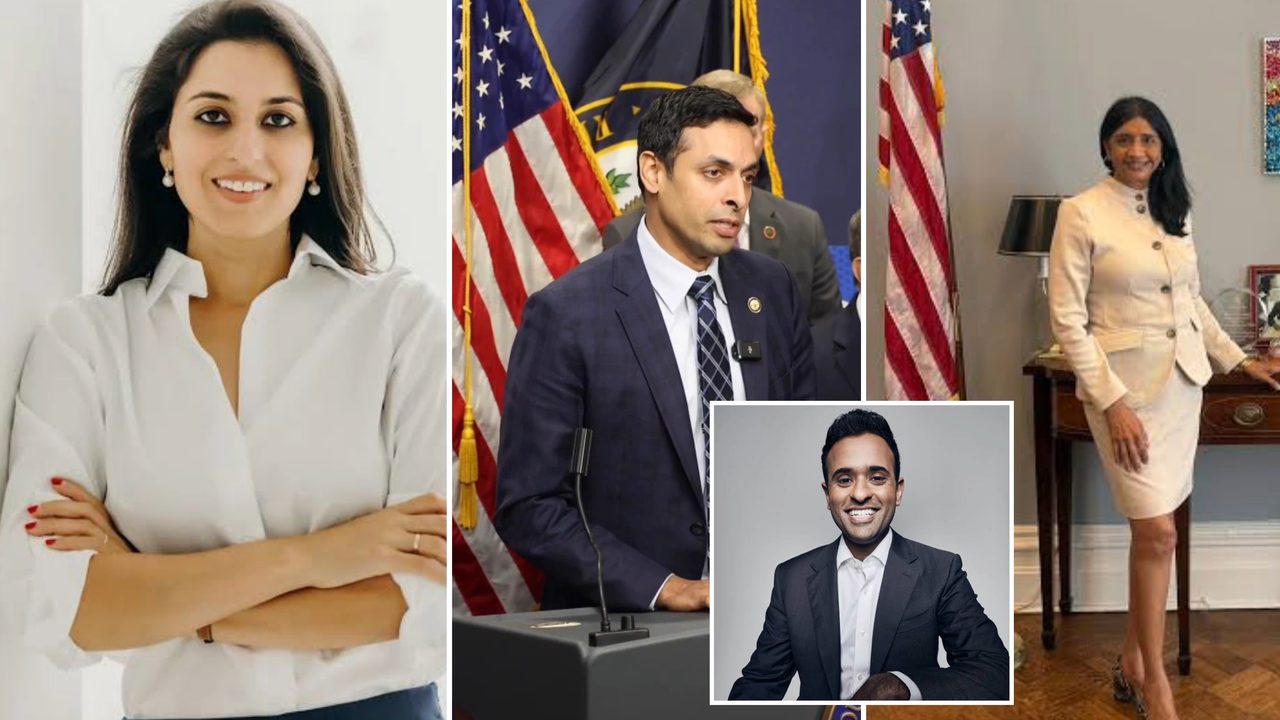
Three Indian-origin Democratic candidates have secured significant victories in the 2026 United States midterm elections, strengthening the community’s presence in American public life. Pia Dandiya won a seat in the US House from Florida, incumbent Congressman Suhas Subramanyam retained his Virginia constituency, and Maryland Lieutenant Governor Aruna Miller won another term alongside Governor Wes Moore.
The results delivered a mixed outcome for Indian-origin candidates across party lines. While the three Democrats emerged victorious, Republican Vivek Ramaswamy lost the Ohio governor’s race to Democrat Amy Acton. The contest drew national attention in its closing weeks after Ramaswamy’s campaign released a controversial advertisement featuring Acton’s estranged mother.
Together, the races illustrate the expanding participation of Indian-origin Americans in US electoral politics — from the House of Representatives to state executive leadership — while also demonstrating that candidates of the same heritage can have sharply different political fortunes.
Pia Dandiya wins Florida’s 22nd Congressional District
Democrat Pia Dandiya won election to the US House of Representatives from Florida’s 22nd Congressional District, defeating Republican Casey Askar. The Associated Press called the race for Dandiya in a closely watched open-seat contest in South Florida. The Associated Press reported her victory.
Born and raised in Palm Beach County, Florida, to parents who came to the United States from India, Dandiya has built a career spanning education, public service and the technology sector. She graduated from Harvard University in 2009 with a degree in Government and began her career as a middle- and high-school teacher.
More Read

At 28, Dandiya became the founding principal of a high school in Harlem, New York. Her campaign biography says 86 per cent of the students came from low-income families and that every student in the school’s graduating cohort earned admission to college. She later became a White House Fellow, serving at the Domestic Policy Council and the Department of Education, and worked across administrations led by both Democratic and Republican presidents.
After her White House fellowship, Dandiya moved into the private sector and led public-sector work at Apple. Her work focused on using technology to modernise public services, including education and healthcare systems. Her campaign biography and a CBS Miami interview outline her background and reasons for entering the race.
Affordability, education, healthcare, childcare and protecting Social Security and Medicare were among the issues she emphasised during her campaign. Her victory adds another Indian-origin voice to the House and gives her a national platform after a career that has moved through classrooms, federal service and technology.
Suhas Subramanyam secures re-election in Virginia
Indian-American Democrat Suhas Subramanyam won re-election to the US House of Representatives from Virginia’s 10th Congressional District, defeating Republican challenger Dave T. Beckwith. The Associated Press called the race for Subramanyam. Potomac Local’s election report provides the district result breakdown.
Subramanyam first entered Congress in January 2025 after winning the seat previously held by Jennifer Wexton. His election in 2024 made him the first Indian-American elected to represent Virginia in the US House. His 2026 victory gives him another two-year term and continues the presence of an Indian-origin representative from Northern Virginia.
A lawyer by training, Subramanyam earned his undergraduate degree from Tulane University and a law degree from Northwestern University’s Pritzker School of Law. Before entering elected office, he worked with technology start-ups, established a business and served as a White House technology policy adviser during the Obama administration.
He later served in Virginia’s House of Delegates from 2019 to 2023 and in the state Senate from 2023 to 2024 before moving to the US House. His legislative work in Virginia included measures related to tolls, utility bills and prescription-drug costs, alongside bipartisan work on education, taxes and public safety. His official congressional biography outlines his career and public service.
Aruna Miller wins another term as Maryland lieutenant governor
Maryland Lieutenant Governor Aruna Miller has secured another term after Democratic Governor Wes Moore won re-election. Miller ran on the Democratic ticket with Moore, and NBC News projected the governor’s victory. The Moore campaign also announced that Maryland voters had returned the pair to office. The campaign’s election-night statement confirmed their re-election.
Born in Andhra Pradesh, India, Miller moved to the United States with her family when she was seven years old. She earned a Bachelor of Science degree in civil engineering from the Missouri University of Science and Technology and spent 25 years working as a civil and transportation engineer in Montgomery County, Maryland. Her work included transport safety, access to schools and employment centres, and infrastructure for pedestrians, cyclists and public-transit users.
Before becoming lieutenant governor, Miller represented Maryland’s 15th District in the House of Delegates from 2010 to 2018. She worked on legislation concerning STEM education, small businesses, transportation, the environment and working families. She became Maryland’s 10th lieutenant governor in 2023, and the state’s official biography identifies her as the first woman of colour and first immigrant elected to statewide office in Maryland.
As lieutenant governor, Miller has taken part in the Moore administration’s work on transportation, mental health and STEM equity. She also chairs Maryland’s Work Zone Safety Work Group and the state’s Council on Interfaith Outreach. The Maryland Governor’s Office provides her official biography and responsibilities.
Vivek Ramaswamy loses Ohio governor’s race to Amy Acton
The election brought a setback for Indian-origin Republican Vivek Ramaswamy, who lost the Ohio governor’s race to Democrat Amy Acton. The Associated Press projected Acton as the winner, making her the first Democrat to win the governorship in 20 years and the first woman elected governor of Ohio. Ramaswamy, an entrepreneur and former Republican presidential candidate who had President Donald Trump’s endorsement, conceded the race. The Associated Press report on Acton’s victory described the result as a major Democratic breakthrough in a state that has moved towards Republicans in recent elections.
Acton, a physician and former director of the Ohio Department of Health, became a prominent public figure during the COVID-19 pandemic while serving under outgoing Republican Governor Mike DeWine. She had not previously held elected office and campaigned on affordability, access to healthcare and public education, drawing on her experience in public health and her working-class background.
The final stretch of the campaign was overshadowed by an attack advertisement produced by Ramaswamy’s campaign and featuring Acton’s estranged mother, Donna Arthur. In the video, Arthur accused her daughter of lying about her childhood and urged voters not to elect her. The ad became controversial after details of the family’s history emerged: Acton has said she was sexually abused by her stepfather when she was 12, and her mother lost custody of the children in 1978 after the stepfather was indicted on a rape charge. Acton and her mother have been estranged for decades.
The advertisement attracted criticism from both Democrats and Republicans. Republican Governor Mike DeWine was among those who urged that it be withdrawn, while Trump praised the ad and Vice President JD Vance defended Ramaswamy’s decision to run it. Ramaswamy’s campaign later stopped airing the advertisement after the backlash. FactCheck.org reviewed court records and contemporary reporting and found that key elements of Acton’s account of her childhood were supported by documentary evidence. Read the FactCheck.org review and The Washington Post’s report on the ad’s withdrawal.
It would be simplistic to attribute Ramaswamy’s defeat to the advertisement alone. Ohio’s political environment, Acton’s campaign on cost-of-living and healthcare issues, the wider national mood and the Republican Party’s electoral challenges all formed part of the contest. However, the ad became a major late-campaign controversy and gave voters an additional point of scrutiny about the tone and judgement of the Republican nominee.
What the results mean for Indian-origin representation
The victories of Dandiya, Subramanyam and Miller show the breadth of Indian-origin participation in American politics. Dandiya is entering Congress after a career spanning education, federal service and technology. Subramanyam has secured a second term in the House after serving in Virginia’s legislature and the Obama administration. Miller has won another term in a statewide executive office after a long career in engineering and public service.
Ramaswamy’s loss, meanwhile, is a reminder that Indian origin does not translate into a single political identity or guarantee electoral success. Indian-American candidates compete as Democrats, Republicans and independents, and voters judge them within the political and local circumstances of each contest. The 2026 results therefore tell a wider story: Indian-origin Americans are not simply gaining visibility in US politics; they are competing across parties, offices and ideological positions, with their fortunes decided by the same electoral pressures that shape every American campaign.
Sources: Associated Press – Pia Dandiya; Pia Dandiya campaign biography; Office of Congressman Suhas Subramanyam; Potomac Local – Virginia district results; Maryland Governor’s Office – Aruna Miller; Associated Press – Amy Acton and Vivek Ramaswamy; FactCheck.org; The Washington Post.